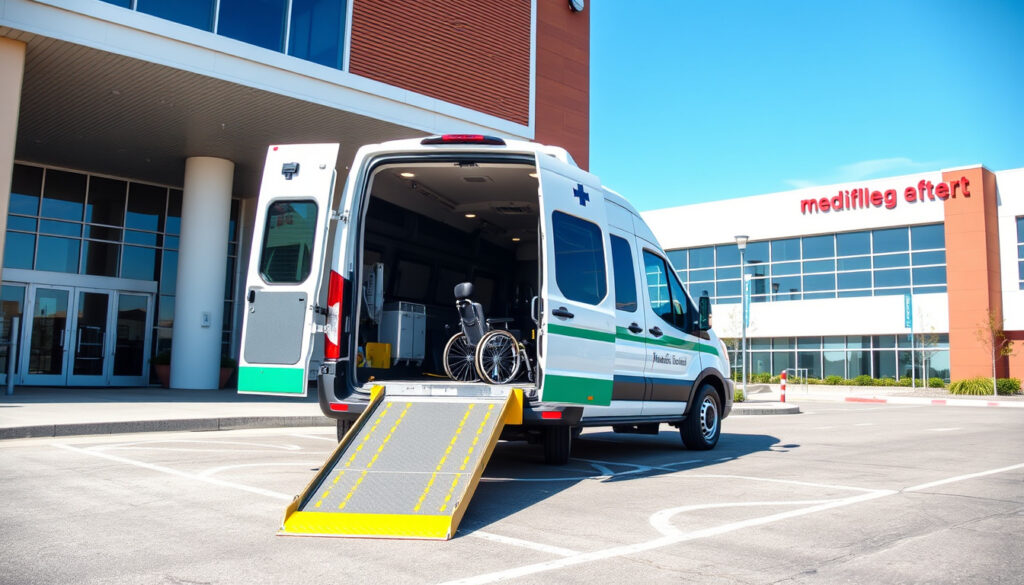
Non-Emergency Medical Transportation Services – Eligibility and Coverage Guide
What Is Non-Emergency Medical Transportation (NEMT)?
Non-emergency medical transportation, commonly referred to as NEMT, provides scheduled rides to medical appointments for individuals who cannot drive or access public transit due to health conditions, disability, or lack of available transportation. Unlike emergency ambulances that respond to life-threatening situations, NEMT serves patients who are medically stable but require assistance reaching routine care such as doctor visits, dialysis sessions, physical therapy, and prescription pickups.
The service operates using a range of vehicles including sedans, wheelchair-accessible vans, rideshare vehicles, litter vans, and non-emergency ambulances. These are dispatched based on the patient’s mobility level and medical needs rather than urgency. According to the Centers for Medicare and Medicaid Services, state Medicaid programs are required to arrange transportation for eligible members when no other means are available.
NEMT fills a critical gap in healthcare access. Research indicates that transportation barriers contribute to missed appointments, delayed diagnoses, and worsened chronic conditions. By ensuring consistent access to care, NEMT programs help reduce hospitalizations and improve health outcomes, particularly among seniors, disabled individuals, and those with end-stage renal disease requiring frequent dialysis.
Key Facts About NEMT Services
- NEMT serves millions of rides annually across the United States, with brokers coordinating trips in every state
- Vehicle types are matched to patient needs: sedans for ambulatory passengers, wheelchair vans for mobility assistance, and non-emergency ambulances for those requiring medical monitoring or stretchers
- Medicaid is federally mandated to provide NEMT as a mandatory benefit; Medicare coverage is more limited and varies by plan type
- Most states use contracted brokers such as MTM to manage scheduling, driver credentials, and ride matching
- Prior authorization is commonly required, particularly for advanced services such as wheelchair vans or non-emergency ambulances
- Some jurisdictions, including Alameda County, California, have partnered with platforms like Uber Health to offer HIPAA-secure, app-based scheduling without requiring patients to install a separate app
- The industry has grown significantly as the population ages and chronic disease prevalence increases demand for regular outpatient care
NEMT at a Glance
| Aspect | Details |
|---|---|
| Service Types | Sedan, van, wheelchair-accessible vehicle, stretcher van, non-emergency ambulance |
| Common Destinations | Doctor offices, dialysis centers, physical therapy, mental health clinics, pharmacies |
| Typical Cost (Uninsured) | $30–$100 per trip depending on distance and vehicle type |
| Primary Coverage Sources | Medicaid NEMT benefit, Medicare Part B (limited), Medicare Advantage supplemental plans |
| Scheduling Lead Time | 24–72 hours in advance is standard; same-day may be available in urgent cases |
| Federal Oversight | Centers for Medicare and Medicaid Services (CMS) sets baseline rules; states administer programs |
| Advance Notice Required | Most plans require requests 48 hours ahead; urgent medical needs may qualify for faster turnaround |
Who Qualifies for NEMT Services?
Eligibility for NEMT centers on two core requirements: enrollment in a qualifying insurance program and a demonstrated lack of available transportation. The specifics vary between Medicaid and Medicare, and across different states, but the fundamental principle remains consistent—NEMT exists to bridge the gap between patients who need care and the appointments they cannot reach independently.
Medicaid Eligibility
Medicaid recipients represent the largest group served by NEMT programs. Under federal law, state Medicaid programs must furnish transportation to covered services when no other means exist. This applies to full-scope Medi-Cal recipients, pregnant individuals who remain eligible for up to 365 days postpartum, and those enrolled in managed care plans. Eligibility determinations typically consider whether a patient has access to a personal vehicle, a capable driver, or reliable public transit routes to their medical provider.
California’s Medi-Cal program distinguishes between Non-Medical Transportation (NMT), which covers basic rides using private or public vehicles without a prescription, and NEMT, which requires a provider prescription and involves ambulance, wheelchair, or litter van services. Managed care plan members (such as those with Kaiser or Molina Healthcare) should contact their plan directly to arrange services.
Medicare Eligibility
Traditional Medicare (Parts A and B) offers limited NEMT coverage. Routine non-emergency rides are generally not covered under original Medicare unless a physician certifies that ambulance transport is medically necessary. Medicare Advantage plans, however, frequently include supplemental NEMT benefits that cover trips to doctor appointments, preventive care visits, and wellness checks—often with minimal or no copay.
Key Populations Served
Beyond standard insurance enrollment, several populations show particularly high reliance on NEMT. Seniors without driver’s licenses or family availability represent a significant share of users. Individuals with physical disabilities affecting mobility, patients with end-stage renal disease requiring multiple weekly dialysis sessions, and those managing complex mental health or substance use treatment schedules also depend heavily on these services. A provider may need to document medical necessity for advanced service levels such as wheelchair vans or stretcher transport.
Does Medicare or Medicaid Cover NEMT?
Coverage for non-emergency medical transportation differs meaningfully between Medicare and Medicaid, and the extent of coverage within each program depends on the specific plan, state regulations, and the level of service required.
Medicaid NEMT Coverage
Medicaid provides the most comprehensive NEMT benefit. Federal guidelines require state programs to cover transportation to any Medicaid-reimbursable service when no alternative exists. This includes rides to medical appointments, dental visits, mental health and substance use treatment sessions, and pharmacy pickups. Available transportation modes encompass public transit passes, rideshare trips, wheelchair-accessible vans, litter vans, non-emergency ambulances, and even air transport in cases of medical necessity. The breadth of coverage reflects Medicaid’s role as the primary insurer for many low-income individuals with significant healthcare needs.
Medicare NEMT Coverage
Original Medicare covers NEMT only under strict conditions. Part B may pay for ambulance services when transport is medically necessary and other vehicles could endanger the patient’s health, such as in cases involving stretchers or specialized monitoring. Routine transportation to outpatient appointments, however, falls outside original Medicare’s scope.
Medicare Advantage plans frequently include non-emergency transportation as a supplemental benefit. These plans may cover rides to routine appointments, preventive care, and pharmacy visits—often with lower cost-sharing than original Medicare. Members should review their plan’s Evidence of Coverage or call member services to confirm specific benefits and any scheduling requirements.
Coverage Comparison
| Aspect | Medicaid | Medicare |
|---|---|---|
| Routine rides | Covered broadly for eligible members | Limited under original Medicare; Advantage plans may offer supplemental coverage |
| Prescription requirement | Required for NEMT (ambulance, wheelchair, litter); not for basic NMT | Often required for ambulance-level transport |
| Vehicle options | Sedans, vans, wheelchair vans, litter vans, non-emergency ambulances, air | Primarily ambulance when medically necessary; Advantage may add other modes |
| Scheduling process | Through managed care plan or state broker | Plan-specific; Advantage plans may offer app-based scheduling |
| Destination types | Medical, dental, mental health, substance use, pharmacy | Medically necessary outpatient and preventive care |
How Do I Schedule NEMT Rides?
The process for arranging NEMT depends largely on whether you are enrolled in a managed care plan or receive fee-for-service Medicaid. Understanding the correct pathway prevents delays and reduces the likelihood of denied requests.
Scheduling Through Managed Care Plans
Members of managed care organizations such as Kaiser Permanente or Molina Healthcare typically schedule NEMT by calling their plan’s member services line. Kaiser offers dedicated numbers for non-medical transportation (1-844-299-6230) and NEMT services requiring medical-level transport (1-833-226-6760), with a separate line for Southern California members (1-800-464-4000). Molina Healthcare members can contact their plan directly through member services to request rides to covered appointments.
Scheduling Through Fee-for-Service Medicaid
If you receive fee-for-service Medicaid rather than a managed care plan, the process involves your healthcare provider. After confirming that transportation is needed, your provider submits a request on your behalf. In California, for instance, the Department of Health Care Services emails a transportation request form following an inquiry, which the provider then completes with clinical justification and appointment details.
Most NEMT programs require scheduling 24 to 48 hours before your appointment. Last-minute requests may be accommodated for urgent medical needs, but planning ahead ensures vehicle availability and reduces stress on the day of your appointment.
Working With Brokers and Technology Platforms
Brokers such as MTM manage NEMT coordination across numerous states and insurance plans. These organizations match patients with appropriate vehicles, verify eligibility, and ensure driver credentials meet state requirements. Some brokers and health plans now offer app-based scheduling through platforms like Uber Health, which allows healthcare coordinators to arrange rides without requiring patients to download an application or manage technology independently. This approach has proven particularly valuable for elderly patients and those with limited smartphone literacy.
For patients requiring wheelchair-accessible vehicles or stretcher transport, specialized providers such as One Access and A Reliable Transport operate in specific regions. One Access focuses on wheelchair and gurney transportation, while A Reliable serves the Oakland area with adapted vehicles. These local operators often work alongside larger brokers to fill capacity gaps in underserved communities.
What Are NEMT Costs and Providers?
For eligible patients, NEMT is often free or available at minimal cost. The out-of-pocket burden for uninsured individuals or those whose coverage does not extend to transportation can range from $30 to $100 per trip, depending on distance, vehicle type, and regional pricing norms.
Major NEMT Providers and Brokers
MTM stands as one of the largest NEMT brokers nationwide, coordinating millions of trips annually for both Medicaid and Medicare Advantage members. The company handles driver vetting, vehicle maintenance standards, scheduling logistics, and compliance with state and federal regulations.
Regional and technology-driven providers supplement the broker model. Uber Health’s HIPAA-compliant platform is used in Alameda County, California, enabling healthcare organizations to schedule rides for patients directly. This model eliminates the need for patients to manage ride apps themselves, placing coordination responsibility with the care team. Specialized providers such as One Access focus exclusively on patients requiring wheelchair or gurney-level transport, while A Reliable Transport serves the Oakland area with adapted sedans and vans.
To identify providers in your area, contact your insurance plan’s member services or your state’s Medicaid transportation coordinator. The National Conference of State Legislatures maintains resources listing NEMT programs by state, and the CMS website offers guidance on federal requirements that apply regardless of location.
NEMT vs. Emergency Ambulance
A clear distinction exists between NEMT and emergency medical services. Emergency ambulances respond to life-threatening situations requiring immediate medical intervention—they operate 24/7 with trained paramedics and life-support equipment. NEMT, by contrast, serves patients who are medically stable and need transport for scheduled, non-urgent appointments. The vehicles used in NEMT range from standard sedans to wheelchair vans, but they lack the advanced medical equipment and emergency staffing of ambulances. Using an emergency ambulance for a routine appointment is not only inappropriate but also significantly more expensive for both the patient and the healthcare system.
Understanding this distinction matters for billing and coverage purposes. Emergency ambulance rides are covered by Medicare Part B under broader medical necessity rules, while NEMT coverage depends entirely on the specific Medicaid or Medicare Advantage benefit structure. Patients uncertain about which service applies to their situation should consult their provider or insurance plan before scheduling.
What Is the Process for Arranging NEMT?
The typical patient journey through NEMT follows a predictable sequence from referral to post-trip billing. Understanding each stage helps patients and caregivers prepare and reduces friction during what may already be a stressful time.
- Obtain a provider referral or prescription. For most NEMT services beyond basic non-medical transportation, a healthcare provider must document the medical need. This is particularly true for wheelchair vans, litter vans, and non-emergency ambulances.
- Confirm eligibility with your insurance plan or broker. Contact your managed care organization or the state’s NEMT coordinator to verify that you qualify and that the specific appointment type is covered.
- Submit a ride request. Requests are typically made by phone through member services or via a provider portal. In some cases, apps or web dashboards allow coordinators to schedule trips directly on behalf of the patient.
- Receive ride confirmation. The broker or plan confirms the pickup time, vehicle type, and driver information. Patients should receive this information at least 24 hours before their appointment.
- Travel to the appointment. On the day of the ride, drivers verify patient identification and confirm the destination. Vehicles are adapted to patient needs, and additional assistance may be available upon request.
- Billing and claims processing. For covered services, the broker or provider bills the insurance plan directly. Patients with eligible coverage typically owe little to nothing out of pocket.
What Is Established Versus Uncertain in NEMT?
NEMT operates within a regulatory framework that establishes some facts clearly while leaving other aspects open to variation. Patients benefit from knowing which elements are consistent across programs and which require case-by-case verification.
Established Information
- Medicaid programs are federally required to provide NEMT to eligible members who lack transportation to covered services
- Original Medicare provides limited NEMT coverage, primarily for ambulance-level transport when medically necessary
- Medicare Advantage plans frequently include supplemental NEMT benefits not available under original Medicare
- States administer their own NEMT programs and may use different brokers, provider networks, and covered service lists
- Federal oversight from CMS establishes baseline rules for provider qualifications, fraud prevention, and the distinction between emergency and non-emergency transport
Information That Varies or Requires Verification
- Exact coverage levels, copays, and authorization requirements differ between individual Medicaid plans and Medicare Advantage products
- Provider networks and available vehicle types vary significantly by geographic region
- Scheduling lead times and same-day availability depend on local capacity and broker resources
- Whether a specific trip qualifies as medically necessary under Medicare’s coverage rules requires provider documentation and plan review
- Costs for uninsured patients or services not covered by insurance are not standardized and should be confirmed in advance
Always confirm coverage specifics by calling your insurance plan’s member services or your state’s Medicaid transportation line. Coverage details found online or in general summaries may not reflect the specific terms of your plan. Having your member ID and appointment details ready when you call will help staff provide accurate information quickly.
Why Does NEMT Matter in the Healthcare System?
Non-emergency medical transportation addresses a fundamental barrier in healthcare access: the gap between patients who need care and their ability to physically reach it. For patients with chronic conditions requiring regular treatment—dialysis three times a week, chemotherapy on a set schedule, or monthly mental health counseling—missing a single appointment can have cascading health consequences. NEMT ensures these patients maintain continuity of care even when personal transportation is unavailable.
From a system-wide perspective, NEMT generates measurable savings. By facilitating regular outpatient visits, the service helps prevent emergency department utilization, reduces hospital readmissions, and supports earlier diagnosis of complications. For Medicaid programs, which bear significant responsibility for low-income and disabled populations, investing in transportation is often far less expensive than covering the costs of avoidable hospitalizations and emergency interventions.
The industry continues to evolve. Technology platforms are reshaping how rides are coordinated, with app-based scheduling and real-time tracking improving reliability for patients and efficiency for providers. Some programs are exploring electric vehicle fleets to reduce environmental impact, while others are integrating NEMT with telehealth platforms to better coordinate in-person and remote care visits.
Official Guidance and Key Sources
Federal agencies provide the authoritative framework for NEMT programs. The Centers for Medicare and Medicaid Services outlines state responsibilities, coverage standards, and fraud prevention requirements on its dedicated NEMT coordination page. The CMS guidance emphasizes that transportation is a mandatory Medicaid service when no alternative means exist and that states must ensure adequate provider networks.
“State Medicaid programs must ensure necessary transportation to covered services for eligible individuals who have no other means of transportation.”
— Centers for Medicare and Medicaid Services
State health departments, including California’s Department of Health Care Services, provide detailed program-specific information including coverage tiers, request procedures, and provider directories. These resources are particularly valuable for understanding the distinction between Non-Medical Transportation and NEMT within a specific state’s program.
Medicare’s official coverage documentation clarifies the limited circumstances under which original Medicare covers ambulance transport, distinguishing between emergency response and non-emergency stretcher or wheelchair transport. Patients enrolled in Medicare Advantage should consult their plan’s Evidence of Coverage, as supplemental benefits vary widely between carriers and products.
Summary
Non-emergency medical transportation bridges a critical gap in healthcare access for millions of Americans covered by Medicaid and Medicare. By providing scheduled, need-appropriate rides to medical appointments, NEMT helps patients maintain treatment continuity, reduces avoidable hospitalizations, and supports better health outcomes among seniors, disabled individuals, and those with chronic conditions requiring regular care.
Eligibility and coverage vary between programs: Medicaid offers the most comprehensive NEMT benefit as a mandatory service, while original Medicare covers only limited ambulance-level transport. Medicare Advantage plans frequently add supplemental ride benefits that expand access to routine appointments. Scheduling typically requires advance notice through managed care plans, state brokers, or healthcare providers, with technology platforms increasingly simplifying the coordination process.
Patients and caregivers seeking to arrange NEMT should start by contacting their insurance plan’s member services or consulting their state’s Medicaid transportation coordinator. Verifying coverage specifics, understanding whether a provider prescription is needed, and scheduling with adequate lead time are the most important steps to ensuring a smooth experience. Those exploring related topics may find our guide to local service accessibility resources useful for understanding how community resources support everyday health and wellness needs.
Frequently Asked Questions
What does NEMT cost for eligible patients?
For patients covered by Medicaid or a Medicare Advantage plan with NEMT benefits, rides are typically free or require minimal copay. Uninsured patients or those whose coverage excludes transportation may pay $30–$100 per trip depending on distance and vehicle type.
How do I find non-emergency medical transportation providers near me?
Contact your insurance plan’s member services or your state’s Medicaid transportation coordinator. National brokers like MTM operate across most states, while regional providers like One Access and A Reliable Transport serve specific areas for wheelchair and adapted vehicle needs.
What is the difference between NEMT and an emergency ambulance?
NEMT provides scheduled, non-urgent transport for stable patients using sedans, wheelchair vans, or non-emergency ambulances. Emergency ambulances respond to life-threatening situations with paramedics and advanced medical equipment. NEMT is far less expensive and appropriate only when medical stability is confirmed.
Does Medicaid cover NEMT in every state?
Yes. Federal law requires all state Medicaid programs to provide NEMT to eligible members who lack transportation to covered services. However, the specific covered vehicle types, scheduling procedures, and provider networks vary by state.
How far in advance should I schedule a NEMT ride?
Most NEMT programs require at least 24 to 48 hours’ notice. Scheduling earlier when possible improves the likelihood of securing your preferred pickup time and vehicle type. Urgent medical needs may qualify for faster turnaround, but advance planning is strongly recommended.
Can I use NEMT for dental or mental health appointments?
Yes, under Medicaid. NEMT coverage for Medicaid recipients typically extends to any Medicaid-reimbursable service, including dental, mental health, and substance use treatment appointments. Medicare coverage for these trip types depends on whether you have original Medicare or a Medicare Advantage plan with supplemental transportation benefits.
Does Medicare Advantage cover non-emergency transportation?
Many Medicare Advantage plans include non-emergency transportation as a supplemental benefit, covering rides to routine appointments, preventive care, and pharmacies. Coverage varies by plan, so members should review their Evidence of Coverage or call member services to confirm specific benefits.
What if my NEMT request is denied?
If a request is denied, patients can appeal by providing additional documentation from their healthcare provider, explaining why transportation is medically necessary and no alternative means exist. Contact your plan’s grievance department or your state’s Medicaid transportation coordinator for appeal instructions and timelines.
More related posts
 Pizza Delivery Near Me: Top Dublin Pizzerias (2025)
 Antonov An-225 Mriya: History, Destruction, Rebuild Feasibility
 Just Shapes & Beats: Ratings, Platforms, Mobile & Sequel
 New York Giants vs Philadelphia Eagles Match Player Stats
 Indiana Dunes National Park – Fees, Trails, Hours & Tips
 What Is an MRI? How It Works, What It Shows, and What to Expect
 2025 401k Contribution Limit: $23,500 & Catch-Up Rules (IRS)
 TJMaxx Credit Card Payment: Online, Phone & Mail Guide