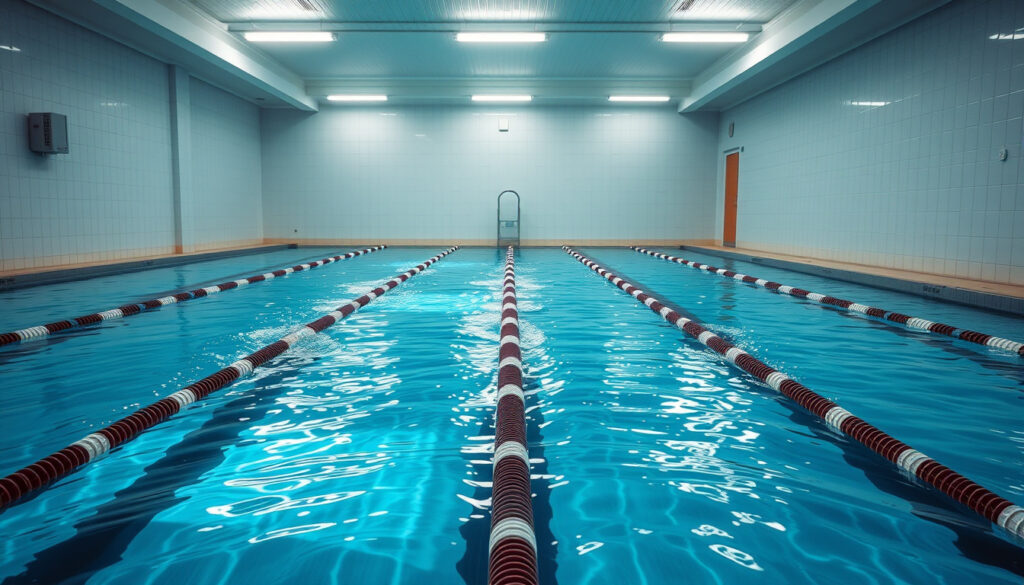
Indoor Pools Near Me: Find & Evaluate Best Public Pools
Few things beat the feeling of stepping into a warm, echoing pool hall on a chilly morning and realizing you don’t have to wait for summer to swim. If that sounds familiar, you’re probably here because you want to find an indoor pool nearby—without guessing which facilities are actually worth your time. The practical differences come down to access rules, real costs, and the safety details that matter before you pack a bag.
Public indoor pools in the U.S.: Approximately 2,900 ·
Average monthly membership cost: $30 to $60 ·
Standard lap pool length: 25 yards ·
Year-round access benefit: Climate-controlled environment
Quick snapshot
- Public pools in the U.S. must meet federal anti-entrapment drain-cover requirements (U.S. Code (federal pool safety law)).
- Operators should follow local, state, tribal, or territorial pool codes (CDC Healthy Swimming Toolkit (national health agency)).
- California’s Orange County code requires continuous disinfection while a public pool is open (Orange County Public Pools Code (California county health code)).
- North Carolina requires a permit for every public swimming pool (North Carolina Rules (state public-health permit rules)).
- The best pool in your radius depends on your priorities: lap swimming, family time, or lessons.
- Seasonal hours can vary significantly by facility.
- Day-pass availability is not guaranteed at every location.
- Federal anti-entrapment drain-cover rules remain an active baseline for every public pool and spa (U.S. Code, federal pool safety law). (International Code Council (pool safety standards body))
- The International Code Council continues to require drain grates and covers that meet safety standards (International Code Council (pool safety standards body)).
- Before your first visit, check the facility’s permit and inspection status.
- Ask whether the pool is disinfected continuously while open (Orange County Public Pools Code).
- Compare day pass and membership prices before you choose a facility.
Eleven entries, one pattern: regulators treat public-pool safety as an ongoing checklist, not a one-time inspection.
| Fact | Detail |
|---|---|
| Primary search target | indoor pools near me |
| Average monthly membership | $30–$60 |
| Year-round access | Climate-controlled environment |
| Federal drain safety | Compliant covers and anti-entrapment devices required (U.S. Code, federal pool safety law) |
| Minimum chlorine in Georgia pools | At least 1 ppm in pools and water playgrounds; 3 ppm in hot tubs (Georgia Department of Public Health (state pool regulator)) |
| Maryland disinfectant ranges | Specific thresholds, including 1.5 ppm and 10.0 ppm, for swimming, diving, and recreational attraction pools (Maryland Regulations (state pool code)) |
| Public vs private legal scope | Ontario applies its public pools regulation to public pools, not private residential pools (Ontario Public Pools Regulation (provincial health code)) |
| Pool supervision | Orange County requires a pool operator to supervise every public pool (Orange County Public Pools Code) |
| State permit | North Carolina requires a permit for each public pool (North Carolina Rules, state public-health permit rules) |
| Emergency equipment | Connecticut requires an accessible emergency care area with a telephone (Connecticut Public Swimming Pool Manual (state health department)) |
| WHO chlorine baseline | 1 mg/L free chlorine is generally adequate for a conventional public pool with good hydraulics and filtration (WHO Guidelines (global water-safety guidance)) |
How to Find Indoor Pools Near California
California has a high density of public pools, so the search usually returns more facilities than you expect. The challenge is separating the pools that fit your schedule from the ones that look good on paper.
Searching Online Directories
- Search “[city] public indoor pool” instead of “indoor pools near me” when you want official listings.
- Open the state or county public-health page that covers pools; that is where code requirements live.
- Bookmark the facility’s own page so you can check hours and closures instead of relying on third-party listings.
Directory listings solve the “where” part. Code requirements solve the “is it safe” part. Use both.
Checking California Parks and Rec
In California, a public pool is a supervised site with a pool operator on duty, not just a basin of water with a lifeguard (Orange County Public Pools Code).
Parks and recreation pages usually list the practical details that reviews don’t: pool operator contact, swim lesson registration, lane reservations, and facility closures. When a city page feels thin, call the listed front desk and ask about daily sanitation and drain-cover checks before you go.
Using Yelp for Local Reviews
- Read recent reviews for water temperature, lane availability, and weekend crowd levels.
- Filter by “indoor” if the facility has both indoor and outdoor pools.
- Use review comments as a shortlist, not as a substitute for official pool code checks.
The pattern: review sites tell you what a pool felt like last weekend; public-health codes tell you what it must do every day. The strongest choice combines both.
How to Find Indoor Pools Near Texas
Texas has enough scale that a general search can pull results from hundreds of miles away. Narrow the search to your metro area, then use public pages for accuracy and review pages for atmosphere.
Exploring Texas Aquatic Centers
- Start with municipal parks and recreation pages; they are the most reliable place to find official facility listings.
- Some Texas cities, such as Corpus Christi, run dedicated aquatic centers rather than adding a pool to a general recreation center.
- If a listing has no address, no hours, or no contact page, treat it as a lead rather than a confirmed facility.
City aquatic centers often combine lap pools, therapy pools, and children’s play areas. That makes them a strong first stop if your household has different swimming goals.
Yelp Search for TX Cities
- Search “[Texas city] indoor pool” and then sort by open-now status during the winter months.
- Read the newest reviews for lane wait times and pool temperature.
- Use reviews to build a shortlist, then verify the official operation hours on the city’s site.
Reviews add color, but they don’t replace the operational basics. A pool that looks relaxed in reviews still needs to meet the same disinfection and safety standards as a bigger public facility.
Day Pass vs. Membership Options
- A day pass is the cheapest way to test a pool before committing to a membership.
- If you plan to swim more than twice a month, a $30–$60 monthly membership often beats paying per visit.
- Ask whether the membership includes access to other city recreation centers and fitness rooms.
The trade-off: a day pass protects your budget but costs more in the long run; a membership pays off only when you use the facility often enough to cover the monthly fee.
Tips for Finding Public Indoor Pools Near You
Once you know the type of facility you want, the search gets simpler. Use these methods in order: search, local intel, then the official page.
Using Google Maps and Search
- Search “public indoor pool” plus your city’s name and “recreation center” for better municipal results.
- Use the open-now filter while you plan because public pool hours shift with seasons and school holidays.
- Look for the word “lap” or “fitness swim” if your goal is swimming laps.
Map results give you distance and photos; they don’t always show the day’s schedule. Always confirm with the official facility page before heading out.
Asking Local Facebook Groups
- Ask which nearby indoor pool has the least crowded weekday morning lane swim.
- Ask parents about swim lesson quality and family changing rooms.
- Cross-check personal recommendations with the city’s listed hours.
Neighbors can tell you what the schedule looks like in practice. Use their answers as context, not as the final fact.
Visiting Municipal Recreation Websites
- Open the city’s parks and recreation page and locate the indoor pool section.
- Look for permit, inspection, or code information, the same way you would for a restaurant’s health score.
- Confirm daily hours, day-pass availability, and swim lesson registration.
- Ask the front desk about continuous disinfection and drain-cover safety before your first swim (International Code Council, pool safety standards body).
Municipal pages are the one place where a facility has to tell the truth about rules, because the rules are public records. If the information isn’t there, call the operator directly.
What Amenities Do Public Indoor Pools Offer?
Public pools vary from simple lap facilities to full recreation centers. Once you know what standard features look like, you can compare apples to apples.
Lap Lanes and Diving Wells
- The standard length for a fitness or competition lap pool is 25 yards.
- Lap swimming areas are usually separated from open swim and lesson zones.
- Diving wells need extra depth and overhead clearance, so they are less common in smaller rec centers.
If you’re training for distance, ask whether the pool keeps a dedicated lane during open swim hours. A 25-yard pool with two busy lap lanes can still be a good workout if the schedule protects lap time.
Swim Lessons and Water Fitness Classes
- Public recreation centers commonly pair open swim with swim lessons, water aerobics, and lifeguard certification.
- CDC guidance treats education and community programming as part of a healthy swimming environment (CDC Healthy Swimming Toolkit).
Lesson programs matter even if you already know how to swim, because they signal that the facility has trained staff, defined safety routines, and a schedule built around teaching.
Locker Rooms and Child Care Facilities
- Family locker rooms and accessible changing areas are more common in newer public pools.
- Some recreation centers offer short-window child care while parents swim.
- A clean locker room is a decent proxy for how seriously the facility treats maintenance.
The takeaway: amenities are not extras; they shape how often you’ll actually go. A pool with good lane access and a clean changing room will get more of your time than one with fancier water features but worse logistics.
Public vs Private Pools: Which Is Best for You?
Your shortlist probably contains at least one public pool, one hotel or fitness-center pool, and maybe an indoor water park. They look similar online, but the access rules are very different.
Cost Comparison: Day Pass vs. Membership
A public pool’s monthly membership usually lands in the $30–$60 range, which gives you a clear reference point when a hotel or fitness-center pool quotes a higher price.
Three access models, one pattern: the more doors a pool opens, the more operational rules it carries.
| Factor | Public pools | Hotel & fitness pools | Indoor water parks |
|---|---|---|---|
| Access | Open to residents and visitors via day pass or membership | Available to hotel guests or fitness-club members | Open to anyone with a day pass, usually with height rules for slides |
| Typical cost | $30–$60 per month at many public rec centers | Included in hotel rate or gym membership | Higher per-visit ticket, family pricing common |
| Crowds | Busiest after school and on weekend mornings | Smaller, more controlled | Busiest on weekends and school breaks |
| Amenity focus | Lap lanes, lessons, open swim | Saunas, gyms, quieter hours | Slides, wave pools, lazy rivers |
| Safety oversight | State and local codes set disinfectant ranges (Maryland Regulations, state pool code) | Provincial and state rules often cover semi-public venues (Ontario Public Pools Regulation) | Drain-cover standards apply to all public pools and spas (International Code Council) |
The pattern: public pools trade some privacy for price; private pools trade price for smaller crowds; water parks trade both for entertainment. There is no universal winner, only the right match for your habit.
Upsides
- Public pools tend to be the cheapest way to swim regularly.
- They usually offer lap lanes, lessons, and family open swim at one site.
- They are more likely to appear in official permit and inspection systems.
Downsides
- Peak hours can mean crowded lanes and limited open swim slots.
- Hours and day-pass policies can change seasonally.
- Older buildings may have dated locker rooms.
Crowds and Availability
- Public pools are busiest after school and on weekend mornings.
- Hotel and fitness pools tend to be quieter but with narrower hours.
- Indoor water parks spike on holidays and spring break.
If your main goal is reliable lane time, the crowd schedule matters more than the amenity list. A public pool with a dedicated lap lane in the early morning can beat a private club with no lane discipline.
Additional Amenities (Sauna, Gym Access)
- Fitness-club pools usually add saunas, steam rooms, and gym floor access.
- Hotel pools often include towels and lobby coffee, but not training equipment.
- Public pools are more likely to have swim team programs and discounted family passes.
The trade-off: if you want a reliable workout, a public pool with a lap schedule beats a prettier private pool that limits lane time; if you want a carefree family afternoon, a water park’s entertainment value may justify its higher price.
What the evidence settles
- Public pools are regulated operations with permit, filtration, and safety equipment requirements (North Carolina Rules, state public-health permit rules).
- Public pools must meet federal anti-entrapment standards (U.S. Code, federal pool safety law).
What still depends on the facility
- Seasonal hours vary significantly by facility.
- Day-pass availability is not guaranteed.
- Whether a hotel or fitness-center pool counts as “public” depends on local law; Ontario applies its public pools regulation to public pools, not private residential pools (Ontario Public Pools Regulation).
- Continuous disinfection is a code requirement in many jurisdictions, but not universally enforced.
“Operators should follow applicable local, state, tribal, or territorial pool codes.”
“For a conventional public or semi-public swimming pool with good hydraulics and filtration, a free chlorine level of 1 mg/l throughout the pool is generally adequate.”
WHO Guidelines for Safe Recreational Water Environments (global health guidance)
Public pools are regulated, staffed, and often cheaper than they look, but only if you check the operational details before you swim. For swimmers in California and Texas, the choice is clear: start with municipal pages and a short safety checklist, or pay the same money for a pool that is crowded, cold, or closed when you arrive.
Frequently Asked Questions
Are hotel pools open to non-guests?
Most hotel pools are reserved for registered guests. If you’re planning a stay, ask about pool hours and whether lap swimming is possible. Some fitness hotels sell day passes, but that varies by property.
What is the average cost of a public indoor pool?
Average monthly memberships run from $30 to $60, and many facilities also sell single-visit day passes. Day-pass availability is not guaranteed at every location, so confirm before you go.
Can I swim laps at a public indoor pool?
Many public pools include lap lanes, and the standard fitness pool length is 25 yards. Check the lane schedule before visiting because lap time is often limited during open swim.
Are indoor pools safe for children?
Indoor pools are safe when adults supervise and the facility follows posted safety rules. Federal law requires anti-entrapment drain-cover standards for public pools and spas (International Code Council).
How clean are public indoor pools?
Cleanliness depends on how carefully the facility operates. Maryland’s regulations set specific disinfectant ranges for swimming, diving, and recreational attraction pools (Maryland Regulations). Ask about the pool’s daily testing routine if you are concerned.
How can I find pool reviews near me?
Use review platforms to read about crowds, water temperature, and locker rooms, then verify the facility’s official hours and permit information on your city’s parks and recreation page.
What should I bring to a public indoor pool?
Bring a swimsuit, goggles, a swim cap if required, a towel, a lock, flip-flops, a change of clothes, and your day-pass or membership card. Keep valuables at home or in a locker.
Do indoor pools offer swimming lessons for adults?
Many public recreation centers run adult swim lessons, water fitness classes, and lifeguard certification programs. Check the facility’s program calendar because class times often follow school terms.
More related posts
 2025 Honda Civic Type R: Specs, Price, Speed & Comparisons
 76ers vs Charlotte Hornets Match Player Stats: Box Score
 Aladdin Ground Beef Recall: Key Facts and Aldi Confusion
 Love Island UK Season 12: Cast, Winners & Where to Watch
 How to Get Rid of Cellulite: Science-Backed Treatments
 Fox Cancels The Great North After 5 Seasons: Why
 Restaurants Open on Thanksgiving: Chains and Local Spots
 Translate English to Myanmar: Best Tools and Methods in 2025