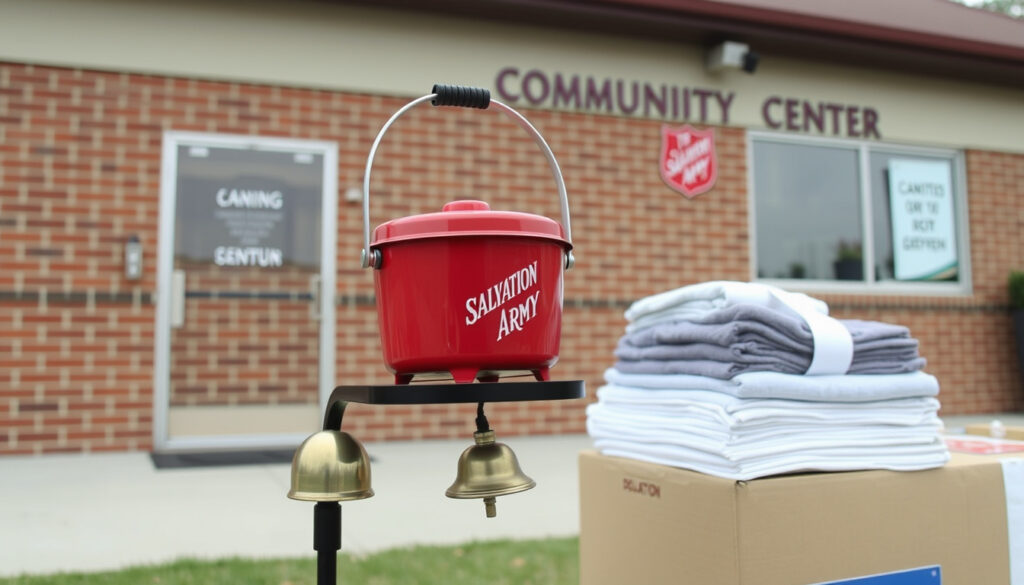
Salvation Army Near Me: Donation Tips & Locations
You’ve probably got a bag of clothes or an old sofa you’re ready to part with, and The Salvation Army often comes to mind. But before you load up the car, there’s more to know than just the nearest drop-off spot. This guide walks you through what the organisation actually accepts, how to schedule a pickup, and a few things about its mission that might surprise you.
Founded: 1865 ·
Countries where active: 130+ ·
Annual bed-nights provided in Ireland: >250,000
Quick snapshot
- The Salvation Army is a Christian church and charity (Acceptable Donation Items page)
- It does not accept hazardous items like paint or chemicals (Salvation Army Central Ohio guidelines)
- Donated clothing surplus often ends up in landfills (Salvation Army Thrift Store FAQs)
- Exact list of accepted items varies by local thrift store (Salvation Army Thrift Store FAQs)
- Whether all Salvation Army locations offer home pickup (Salvation Army Central Ohio guidelines)
- Donation pickup scheduling is available by phone or online, but same-day is rare (Salvation Army Central Ohio guidelines)
- Check local guidelines before donating – rules differ by command (Salvation Army Thrift Store FAQs)
The Salvation Army’s donation rules vary by location, so donors should check the local center before dropping off or scheduling pickup, according to Salvation Army Thrift Store and Donation Center FAQs. That’s the central takeaway from the organisation’s own guidance. Here’s a snapshot of the key numbers.
| Fact | Value |
|---|---|
| Founded | 1865 |
| Global Reach | 130+ countries |
| Irish Operations | 5 residential centres, 250,000+ bed-nights annually |
| US Thrift Stores | Over 1,000 |
| Donation Pickup Hotline | 1-800-SA-TRUCK |
| Vehicle Donation | Accepted at select locations (condition-dependent) |
What items does Salvation Army not accept near me?
Four categories typically get a “no” from local donation centres, though the exact list depends on where you are. Salvation Army Central Ohio warns that broken, soiled, recalled, banned, or safety-noncompliant items should never be donated. Here’s what most locations reject outright.
What items do charity shops reject?
- Used mattresses (hygiene regulations, per Salvation Army Thrift Store FAQs)
- Large appliances like refrigerators (typically not accepted, per Salvation Army Thrift Store FAQs)
- Hazardous materials such as paint or chemicals (prohibited, per Salvation Army Central Ohio guidelines)
- Car seats and cribs (may be rejected due to safety recalls, per Salvation Army Thrift Store FAQs)
Even accepted items like working appliances can be turned away if they’re built-in or gas-powered. The local store manager has the final call.
Common Salvation Army donation restrictions
Vehicles are a special case. Salvation Army Thrift Store FAQs note that acceptance depends on differing regulations, so not all types of vehicles are accepted at all locations. Always phone ahead.
The pattern: the more specialised the item, the more likely it’s restricted. The implication: call your local store before you drive over.
What items can I donate to charity?
Most Salvation Army donation centres accept a broad range of gently used goods. Acceptable Donation Items page lists clothing, accessories, domestics, household items, books, media, furniture, and working appliances. The Southeast Michigan page adds computers, electronics, exercise equipment, lawn equipment, and even pianos (Donation Requirements – Southeast Michigan).
Most needed items for charity
- Gently used clothing – outerwear, sleepwear, shirts, shoes, suits, skirts, pants, jeans (Salvation Army Thrift Store FAQs)
- Non-perishable food – peanut butter, canned meats, canned fruits (accepted at some locations, per Salvation Army Central Ohio guidelines)
- Personal care items – soap, shampoo, toothpaste, deodorant (Salvation Army Central Ohio guidelines)
- Furniture in good condition, electronics in working condition (Salvation Army Pickup Guide)
How to donate to a food bank effectively
Cash donations are often most valuable for charities because they can be used where need is greatest. Salvation Army Central Ohio guidelines also accepts food and personal care items at some locations. For food banks generally, high-protein items like canned meat, beans, and peanut butter are recommended by Feeding America.
The Salvation Army’s thrift store revenue directly funds rehabilitation services. A well-chosen donation does double duty: it clears your home and supports community programs.
The trade-off: donating low-quality items costs the charity money in disposal fees. Donors who check the local list first ensure their gift actually helps.
Where is the nearest Salvation Army donation centre?
With over 1,000 thrift stores in the US alone, there’s likely one not far from you. Salvation Army Thrift Store FAQs provide a location finder on their site. In the UK, an online shop sells donated goods as well.
How to find Salvation Army thrift stores
- Use the official store locator at satruck.org (Salvation Army Thrift Store FAQs)
- Search “Salvation Army near me” on Google Maps
- Check the Central Ohio guidelines page for an example of local donation guidelines
Scheduling a home pickup
Home collection can be scheduled by calling 1.800.SA.TRUCK or through the online form. Salvation Army Central Ohio guidelines advises donors not to leave items outside a collection box or center if no one is there to receive them.
Using the Salvation Army online shop
The Salvation Army UK operates an online shop for donated goods. Availability varies by region.
The catch: not every location offers pickup, and some have weight or size limits. Always confirm before scheduling.
What religion is The Salvation Army affiliated with?
The Salvation Army is a Christian denomination within the Holiness movement. Its doctrine is based on the Bible and Wesleyan theology, according to Acceptable Donation Items page (which references the organisation’s identity). The organisation is both a church and a charity.
Core beliefs of The Salvation Army
- God as Father, Son, and Holy Spirit
- Salvation through faith in Jesus Christ
- Baptism and the Lord’s Supper as sacraments
- Practical service as an expression of faith
How religion affects their charity work
All programs are open to people of any faith or none. The Salvation Army’s religious foundation shapes its mission but does not restrict services. Acceptable Donation Items page notes that the organisation’s thrift stores and programs serve the community regardless of religious affiliation.
The implication: donors uncomfortable with the religious aspect can still be confident their goods go to secular community services.
What is the dark side of donating clothes to charity?
While donating feels good, the textile recycling system has serious flaws. Salvation Army Thrift Store FAQs acknowledge that many donated clothes end up in landfills due to oversupply. Some charities sell low-quality donations to for-profit textile recyclers, reducing the community benefit.
Environmental impact of clothing donations
- Over-donation leads to waste – unsold items are often exported or landfilled (Salvation Army Thrift Store FAQs)
- Poor-quality donations harm the charity’s reputation and increase disposal costs (Salvation Army Central Ohio guidelines)
- Items with stains, tears, or missing parts are not resaleable
Problems with over-donation and waste
The Salvation Army Central Ohio guidelines page states that donated items should be clean and non-soiled, and donors should include manuals and all pieces or parts when available. Failing that, the charity may have to discard the item.
The more clothes we donate, the more charity shops are overwhelmed. The best donation is a small, high-quality one – not a closet purge.
The pattern: donors who treat the thrift store as a landfill alternative are actually making the problem worse. Donate less, but donate better.
Pros and cons of donating to The Salvation Army
Upsides
- Funds community programs fighting poverty, homelessness, and modern slavery
- Thrift store revenue supports rehabilitation services
- Donations may be tax-deductible (in the US)
- Free home pickup available in many areas
- Wide network of drop-off locations
Downsides
- Accepted items vary by location – no universal list
- Low-quality donations often end up in landfill
- Some locations do not offer pickup
- Religious affiliation may not align with every donor’s values
- Vehicle donation acceptance is inconsistent
What’s confirmed and what’s still unclear
Confirmed facts
- Salvation Army is a Christian church and charity
- It does not accept certain hazardous items like paint or chemicals
- Donated clothing surplus often ends up in landfills
What’s unclear
- Exact list of accepted items varies by local thrift store
- Whether all Salvation Army locations offer home pickup
Perspectives from the organisation
Donation rules vary by location, so donors should check with their local center before dropping off or scheduling pickup.
Salvation Army Thrift Store and Donation Center FAQs
Donated items should be clean and non-soiled, and donors should include manuals and all pieces or parts when available.
Salvation Army Central Ohio guidelines
For donors in the UK or Ireland, the same principles apply: check locally, give quality items, and avoid hazardous goods. The Salvation Army’s own guidance is consistent across sources.
Related reading: Salvation Army donation guidelines and accepted items · How to schedule a Salvation Army pickup
facebook.com, largestcharities.com, the-sun.com, saihqarc1.salvationarmy.org, westernarc.salvationarmy.org, budgetdumpster.com, uniteddonationshelpblog.wordpress.com
Frequently asked questions
How can I contact my local Salvation Army?
Use the store locator at satruck.org or call 1-800-SA-TRUCK. Local corps pages also list phone numbers.
What should I do with unsold donation items?
The Salvation Army sells what it can in thrift stores; unsold goods are often recycled or disposed of. Donors should only give items in resaleable condition.
Are donations to Salvation Army tax-deductible?
In the US, yes, if you itemize deductions. Keep a receipt for your records.
What happens to donated goods?
Items are sorted, priced, and sold in thrift stores. Revenue funds rehabilitation and community programs.
Does Salvation Army accept electronic items?
Yes, many locations accept working electronics. Check with your local store first.
Can I donate furniture to Salvation Army?
Yes, if it’s in good condition. Some locations may offer pickup for large items.
Does Salvation Army pick up donations?
Many locations offer free home pickup. Call 1-800-SA-TRUCK or use the online scheduler to confirm.
For anyone in the US or Ireland looking to donate, the choice is clear: check your local Salvation Army’s accepted items list, give quality goods, and don’t assume pickup is available everywhere. The organisation’s mission is strong, but it works best when donors treat it as a partner, not a dumping ground.
More related posts
 Foods That Lower Cholesterol: Top NHS-Backed List
 Aladdin Ground Beef Recall: Key Facts and Aldi Confusion
 Love Island UK Season 12: Cast, Winners & Where to Watch
 How Old Am I? Calculate Your Age in Years, Days, and Seconds
 Las Vegas Raiders Coach Fired – Full Story Timeline Reasons
 Alexander Ludwig Movies and TV Shows: Full Filmography
 Where to Watch Philadelphia Eagles vs Buffalo Bills
 New York ZIP Codes: Manhattan, Brooklyn, Queens & More