Where Is the Liver? Location, Pain Signs & Damage
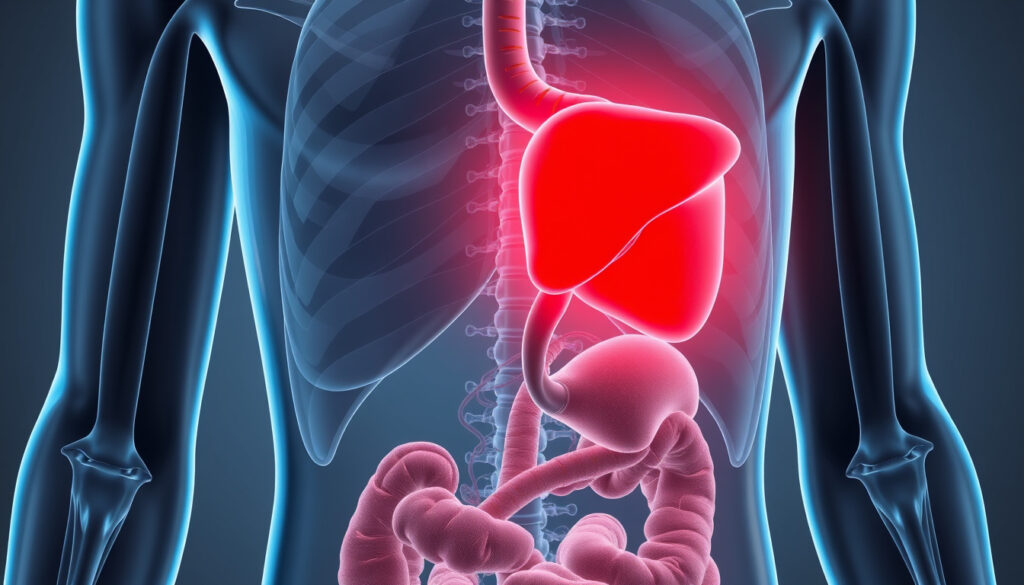
You’ve probably pressed on your right side at some point, wondering if that dull ache is your liver or just a pulled muscle. The liver sits quietly under your ribs, doing over 500 jobs — filtering blood, producing bile, storing energy — yet most of us have no idea exactly where it lives or what it feels like when it’s in trouble. This guide will show you exactly where your liver is, how to interpret pain signals, and why that “liver cleanse” drink you’ve heard about probably isn’t what you think.
Liver Weight: 1.4 kg (3 lb) · Location: Right upper quadrant of abdomen, under the rib cage · Vital Functions: Over 500 · Fatty Liver Prevalence: Affects ~25% of adults (non-alcoholic fatty liver disease)
Quick snapshot
- Right upper abdomen, under the ribs (Cleveland Clinic anatomy guide)
- Slightly left of midline in some individuals (Mayo Clinic hemangioma overview)
- Above the stomach and right kidney (Cleveland Clinic anatomy guide)
- Dull ache under right ribs (WebMD pain guide)
- Sharp pain with gallstones (Vinmec clinical article)
- Radiating to back or shoulder (WebMD pain guide)
- Fatigue and nausea (Cleveland Clinic anatomy guide)
- Jaundice (yellow skin/eyes) (Mayo Clinic liver disease symptoms)
- Dark urine / pale stools (Mayo Clinic liver disease symptoms)
- Water supports function but no detox drink proven (British Liver Trust patient info)
- Coffee and green tea may help enzymes (Mayo Clinic liver disease symptoms)
- Avoid alcohol and fad cleanses (British Liver Trust patient info)
Five key facts at a glance, one pattern: the liver’s location and early distress signals are surprisingly consistent, but myths about flushing it out are not backed by strong evidence.
| Fact | Value |
|---|---|
| Liver weight | 1.4 kg (3 lb) |
| Location | Right upper quadrant (RUQ) |
| Vital functions count | 500+ |
| Fatty liver incidence | ~25% of adults |
| Liver failure urine color | Dark tea/cola |
Where is the liver located right or left?
Most people assume the liver is tucked somewhere in the middle of the belly. The short answer: it’s overwhelmingly on the right side, but a small portion can cross the midline. Here’s the breakdown by anatomy and by sex.
Where is the liver on a woman?
- The liver sits in the right upper quadrant, under the rib cage — same as in men. No biologically significant difference in position by sex.
- Some anatomy sources note the liver may appear slightly more prominent in women because of differences in rib cage shape and torso length, but the organ is not located differently.
Where is the liver from the back?
- From the back, the liver is located behind the lower right ribs, roughly between the 7th and 11th ribs. It extends from the right side of the spine to just left of the vertebral column.
- Pain referred to the right shoulder blade or upper back can originate from the liver (WebMD pain guide).
What side is your liver on male?
- The right side. The liver spans from the right upper abdomen to slightly left of the midline in most people, including males.
Where is the liver and kidney located in the female body?
- The right kidney sits just below the liver. The liver covers the upper portion of the right kidney. Both are on the right side, with the liver more superior (closer to the diaphragm).
What system is the liver in?
- The liver belongs to the digestive system. It produces bile for fat digestion and filters blood from the digestive tract before it circulates systemically (Mayo Clinic liver disease symptoms). Some sources also classify it as part of the endocrine system due to its metabolic hormone regulation.
Knowing the liver’s right-sided position helps you distinguish between liver pain (right side) and, say, spleen pain (left side). The location is consistent across sexes — if you feel deep discomfort under the right ribs, it’s worth investigating.
Where would you feel liver pain?
Liver pain is the body’s way of telling you something under those right ribs needs attention. But it doesn’t always stay there.
Where is liver pain located?
- Most common: upper right abdomen, directly under the rib cage (WebMD pain guide).
- Pain can also be felt in the epigastrium (center of the upper belly) (ScienceDirect clinical summary).
- The liver capsule stretches when the organ swells, causing a dull ache or heavy sensation (Bottom Line, Inc. health report).
Can liver pain be felt in the back?
- Yes. Pain often radiates to the right shoulder blade or upper back (Vinmec clinical article).
- Some patients report pain in the neck or even the right shoulder (referred pain via the phrenic nerve) (ScienceDirect clinical summary).
What does liver pain feel like?
- Usually dull, aching, and poorly localized (ScienceDirect clinical summary).
- Sharp, stabbing pain may indicate gallstones or a sudden obstruction.
- Severe, sudden pain with fever may signal a medical emergency (Ubie Health emergency guide).
What are the first signs of a bad liver?
The liver is notoriously quiet until damage is advanced. Early signs are subtle and often dismissed.
What are the first signs your liver is struggling?
- Fatigue, loss of appetite, and nausea (Cleveland Clinic anatomy guide).
- Right upper quadrant discomfort that comes and goes.
- Jaundice — yellowing of the skin or eyes (Mayo Clinic liver disease symptoms). Note: Mayo Clinic points out that on Black or brown skin, yellowing may be harder to see.
What are 5 signs of a fatty liver?
- Fatty liver disease is often asymptomatic. When signs appear: fatigue, vague abdominal discomfort, mild right upper quadrant pain, enlarged liver felt on exam, and occasionally elevated liver enzymes on blood work.
What are the four warning signs of a dying liver?
- Jaundice (bilirubin buildup causes yellowing)
- Ascites (fluid accumulation in the abdomen)
- Hepatic encephalopathy (confusion, drowsiness)
- Easy bleeding or bruising (Mayo Clinic liver disease symptoms)
What are 5 signs of an overworked liver?
- Dark urine, pale stools, persistent itching, easy bruising, and swelling in the legs or ankles (Mayo Clinic liver disease symptoms).
Persistent symptoms warrant blood tests for liver enzymes (ALT, AST, GGT) and a doctor’s evaluation.
“Jaundice, abdominal swelling, and confusion are warning signs of advanced liver failure.”
— Mayo Clinic liver disease guide
The implication: your liver doesn’t complain until it’s in serious trouble. That dull fatigue you’ve been ignoring might be the only clue you get.
What color is pee when the liver is failing?
Urine color can be an early clue that bilirubin levels are rising.
Does dark urine always mean liver failure?
- Dark urine (tea- or cola-colored) is a classic sign of liver failure due to bilirubin spilling into urine (Mayo Clinic liver disease symptoms).
- But it’s not definitive: dehydration, beets, certain medications, and even food dyes can darken urine.
What other urine changes indicate liver problems?
- Pale or clay-colored stools often accompany dark urine when the liver can’t excrete bilirubin into the gut.
- A simple urine dipstick test can detect bilirubin, confirming whether the liver is involved.
Dark urine that looks like tea or cola — especially with pale stools — is a red flag for liver trouble. Don’t just drink more water; get a urine dipstick test from your doctor.
What drink cleans the liver?
The internet is full of liver cleanse drink claims — lemon water, beet juice, milk thistle teas. Here’s what the evidence actually says.
Six Drinks To Help Cleanse Your Liver – Patient First
- Hydration itself is key; water helps the liver filter waste.
- Coffee and green tea have shown beneficial effects on liver enzyme levels in observational studies (Mayo Clinic liver disease symptoms).
- Beet juice and lemon water are popular but lack robust clinical proof.
Does milk thistle detox the liver?
- Milk thistle supplements are widely sold for liver health, but systematic reviews show mixed results. The British Liver Trust patient info states that no over-the-counter remedy has been proven to “detox” the liver.
What are the best beverages for liver health?
- Water, black coffee, and green tea are the most evidence-backed choices. Avoid alcohol entirely if you have liver concerns.
“If you put your right hand there, it will cover most of your liver.”
— British Liver Trust patient guide
No drink — not lemon water, not milk thistle — has been scientifically proven to “cleanse” the liver. The best thing you can drink is water, and the best thing you can avoid is alcohol. Don’t fall for fads that promise a quick flush.
What system is the liver in?
You already know it’s part of the digestive system, but the liver spills into other systems too.
Is the liver part of the digestive system?
- Yes — it produces bile that emulsifies fats for digestion.
- It also filters blood from the digestive tract before it reaches general circulation (Mayo Clinic liver disease symptoms).
What other organs are part of the same system?
- The digestive system includes the mouth, esophagus, stomach, small and large intestines, pancreas, gallbladder, and liver.
- The liver also has endocrine functions (hormone metabolism) and is sometimes grouped with the endocrine system.
Because the liver is so tightly woven into digestion, metabolism, and detoxification, symptoms like nausea, bloating, or fatigue after eating can be early signals — don’t ignore them.
Confirmed facts and what remains unclear
Confirmed facts
- Liver is located in the right upper abdomen.
- Liver pain is typically felt under the right ribs.
- Jaundice and dark urine are signs of liver failure.
- Coffee and green tea are associated with lower liver enzyme levels.
What’s unclear
- The effectiveness of specific ‘liver cleansing’ drinks (e.g., lemon water, beet juice) is not scientifically proven.
- The exact prevalence of liver pain referral patterns is not precisely quantified.
- The causal relationship between mild fatty liver and specific symptoms is poorly understood.
- Whether popular milk thistle supplements truly improve liver function remains contested in systematic reviews.
“Your liver is located on the right side of your upper abdomen.”
— Cleveland Clinic patient guide
“The liver is located in the upper right-hand portion of the abdominal cavity, beneath the diaphragm.”
— Johns Hopkins Medicine anatomy resource
The pattern is clear: anatomy is well understood, but many popular health claims around “detoxing” and pain referral remain in need of stronger evidence. For anyone with persistent right‑side discomfort or changes in urine/stool color, the safest move is to see a doctor for blood tests — not to reach for a bottled cleanse.
The liver’s position under the right ribcage is detailed in a detailed anatomy guide, which also covers associated pain patterns.
Frequently asked questions
How big is the liver?
The liver is about the size of a football, weighing roughly 1.4 kg (3 lb) in adults, making it the largest solid organ in the body.
Can you live without a liver?
No — the liver is essential for filtering blood, producing proteins, and metabolism. A liver transplant is the only replacement option in end-stage disease.
What causes liver pain on the left side?
True liver pain is rarely felt on the left because the organ is mostly on the right. Left-sided upper abdominal pain is more likely from the spleen, stomach, or pancreas.
Does liver pain come and go?
Early liver pain from inflammation can be intermittent — dull aches that appear after eating or at night. Persistent pain warrants investigation.
How often should I get liver function tests?
Annual blood tests (ALT, AST, GGT, bilirubin) are reasonable for adults, especially if you have risk factors like obesity, diabetes, or regular alcohol use.
What foods support liver health?
Leafy greens, cruciferous vegetables, berries, and healthy fats (like avocado and olive oil) support liver enzyme balance. Avoid trans fats and excess sugar.
Is liver damage reversible?
Yes — mild fatty liver disease is reversible with weight loss, diet, and exercise. Fibrosis and cirrhosis may not be fully reversible, but progression can be halted.
When should I see a doctor for liver symptoms?
If you have persistent right upper quadrant pain, unexplained fatigue, jaundice, dark urine, pale stools, or abdominal swelling, see a doctor promptly.
Related reading: Swollen Lymph Nodes Neck: Red Flags and When to Worry · Why Am I Constipated? 10 Causes, Relief Tips & Red Flags
More related posts
 Los Angeles Rams vs Atlanta Falcons Match Player Stats
 2/5 as a Percent: How to Convert Step by Step (40%)
 AD&D Insurance: Coverage, Exclusions, and Costs
 Salvation Army Near Me: Donation Tips & Locations
 Big 12 Championship Game 2025: Odds, Teams & History
 What Is Mental Health? Definition, Types & Signs
 Crock Pot Pot Roast: Cooking Time, Mistakes, and Best Liquid
 San Antonio Spurs vs New Orleans Pelicans Match Player Stats – Box Score & Recap