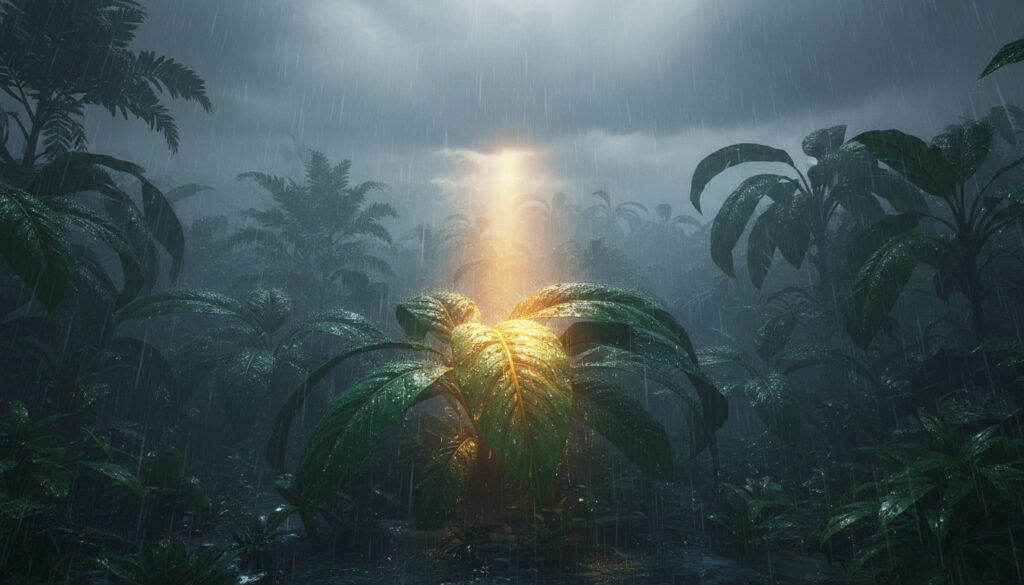
All Summer in a Day – Summary Themes Analysis Guide
Ray Bradbury’s “All Summer in a Day” stands as a defining work of mid-century American science fiction. First published in March 1954 in The Magazine of Fantasy & Science Fiction, the narrative unfolds on a colonized Venus where sunlight appears for only two hours every seven years. The story centers on Margot, a nine-year-old who retains vivid memories of Earth’s sun, and the devastating moment when her classmates lock her away during the brief planetary sunrise.
The tale operates simultaneously as speculative fiction and psychological realism. Bradbury constructs an environment of perpetual rain and subterranean tunnels, examining how environmental scarcity shapes human behavior. The author strips away technological spectacle to focus on elementary school cruelty, creating an allegory about envy, exclusion, and the irreversible consequences of denying others access to beauty.
Literary scholars consistently analyze the work as a meditation on childhood bullying, the psychological necessity of natural light, and the mechanics of remorse. The narrative derives its enduring power from emotional precision rather than scientific extrapolation, cementing its place in educational curricula worldwide.
What is All Summer in a Day About?
Ray Bradbury
March 1954
Venus classroom
Short story (~3000 words)
- The narrative depicts a generation of children born into perpetual darkness who experience sunlight for the first time.
- Margot’s unique status as an Earth-born colonist creates the central social conflict and target for bullying.
- The story explores how scarcity breeds envy and how groups marginalize those who possess what they lack.
- Bradbury frames the sun as a symbol of hope, warmth, and essential humanity denied to the Venusian colonists.
- The conclusion delivers a meditation on immediate remorse and the irreversibility of cruel actions.
- The work functions as climate fiction, exploring psychological effects of environmental deprivation.
- Bradbury’s Venus reflects 1950s anxieties about space colonization and human adaptation to hostile worlds.
| Fact | Details |
|---|---|
| Genre | Science fiction / Allegorical short story |
| Protagonist | Margot (age nine, former Earth resident) |
| Antagonist | William (class bully) and collective classmates |
| Setting | Underground tunnel classroom on Venus |
| Climate | Constant rain; sun visible 2 hours every 7 years |
| Central Conflict | Children lock Margot in closet during sun appearance |
| Climax | Children experience sunlight then realize Margot missed it |
| Themes | Jealousy, bullying, environmental psychology, remorse |
| Publication | The Magazine of Fantasy & Science Fiction |
| Collection | The Stories of Ray Bradbury (1980) |
Who Wrote All Summer in a Day and What Is Its Background?
Publication Context and Allegorical Intent
Ray Bradbury composed the story in 1954, a period when science fiction increasingly explored psychological rather than merely technological frontiers. The work appeared alongside Bradbury’s other examinations of human nature disguised as futuristic scenarios. Critics note his characteristic use of planetary settings to expose earthly moral truths.
The story debuted in The Magazine of Fantasy & Science Fiction during the early Cold War era, when American culture grappled with space exploration anxieties and the psychological costs of isolation. Bradbury later included it in his comprehensive 1980 collection The Stories of Ray Bradbury.
Scientific Imagination Versus Reality
Bradbury’s Venus bears little resemblance to the planet’s actual sulfuric atmosphere and surface temperatures. The author deliberately crafted a habitable yet psychologically oppressive world to serve his thematic purposes. This poetic license allowed him to explore deprivation without the technical constraints of hard science fiction.
While mid-century science understood Venus as uninhabitable, Bradbury imagined a generation-after colonization scenario with tunnel networks and sustainable ecosystems. The setting functions as a psychological laboratory rather than an astronomical forecast.
Literary Technique and Style
The author employs spare, evocative prose to convey the children’s sensory deprivation. Bradbury focuses on tactile and emotional details—the feel of sunlight, the sound of rain, the weight of remorse—rather than technological exposition. This approach generates immediate empathy while maintaining the allegorical distance necessary for moral examination.
The narrative depicts graphic psychological bullying, including physical restraint and emotional torture through forced isolation. The depiction of group cruelty against a vulnerable child may disturb sensitive readers, though these elements serve the story’s ethical framework.
What Are the Main Themes in All Summer in a Day?
Environmental Deprivation and Psychological Damage
The perpetual rain creates measurable behavioral changes in the Venusian children. Before the sun appears, the children appear sullen and irritable, directing their frustration toward Margot. This correlation suggests that natural environments fundamentally regulate human emotional stability. The underground existence produces a generation incapable of generosity, starved of the light necessary for psychological health.
The Symbolism of Sunlight
Bradbury deploys the sun as a multivalent symbol representing hope, memory, and essential humanity. The two-hour window constitutes both literal and metaphorical illumination—momentary beauty in a dark existence. The bleached, ashen appearance of the Venusian colonists emphasizes physical and spiritual malnutrition. Sunlight becomes the scarce resource worth any psychological price, driving the children’s irrational envy.
Jealousy and Collective Cruelty
The children target Margot not merely from inherent meanness but from unconscious resentment of her privileged memories. She possesses experiential knowledge of a world they can only imagine. This jealousy manifests as systematic exclusion, culminating in the closet imprisonment. The group dynamic reveals how shared deprivation breeds collective aggression against those who escape the common fate.
Moral Awakening and Irreversible Loss
The narrative pivots on the moment of remorse. After experiencing the sun’s warmth, the children return to find Margot still confined. Their immediate comprehension of her deprivation generates genuine remorse, yet the sun has already retreated behind seven more years of rain. This structure suggests that moral understanding often arrives precisely when restitution becomes impossible, leaving permanent psychological scars on both victim and perpetrators.
Who Is Margot and Where Does the Story Take Place?
Margot’s Alienation and Memory
Margot functions as the emotional center and narrative catalyst. Unlike her peers born in the tunnels, she lived on Earth until age four, retaining tactile memories of sunlight. She describes the sun as resembling a penny, providing concrete imagery her classmates cannot generate. Her parents’ rumored plans to return to Earth intensify her ostracization, marking her as both temporally and spatially disconnected from the Venusian collective.
The Hostile Environment of Venus
The planet serves as a generation-after colonization setting, with humans inhabiting tunnel networks to survive constant precipitation. The jungles grow perpetually, crushed and regrown under relentless rain, symbolizing cyclical destruction. This environment shapes the children’s psychology, creating a claustrophobic society where the sky remains unseen and the sun exists only as classroom rumor until the seven-year cycle completes.
The Antagonists and Authority
William operates as the active antagonist, organizing the bullying and physically restraining Margot. The collective classmates function as complicit enablers, participating in the closet imprisonment. The teacher represents failed authority, leaving the classroom at the critical moment and assuming all children are present when leading the group outside. This absence allows the tragedy to unfold, suggesting institutional blind spots to individual suffering.
For readers examining how narrative structure resolves character conflicts, Plot Cast Ending Explained offers comparative analysis of closure mechanics in psychological fiction.
How Did the Story Develop Over Time?
-
Initial Publication: The story appears in The Magazine of Fantasy & Science Fiction, introducing Bradbury’s Venus to the reading public. Source: Wikipedia.
-
Early Collection: The narrative gains inclusion in various Bradbury anthologies, establishing itself as a curriculum standard for middle-grade education.
-
Television Adaptation: PBS produces a live-action adaptation for the series WonderWorks, translating the claustrophobic tunnels to visual media and introducing the story to subsequent generations.
-
Definitive Collection: Bradbury includes the story in The Stories of Ray Bradbury, a comprehensive two-volume set cementing its canonical status within his body of work.
-
Educational Standard: The text becomes a staple in anti-bullying curricula and climate fiction studies, with study guides analyzing its psychological and environmental themes.
What Is Definitively Known Versus Uncertain?
| Established Information | Information That Remains Unclear |
|---|---|
| The story is pure fiction with no basis in actual events. | Whether Margot’s parents actually planned to return to Earth remains speculation based on children’s rumors. |
| The sun appears for exactly two hours every seven years per the text. | The exact technological mechanisms allowing Venus colonization are unspecified. |
| Margot lived on Earth until age four, arriving on Venus five years ago. | The long-term psychological fate of the children after their remorse is unrevealed. |
| William leads the bullying and physically restrains Margot. | Whether the teacher faced professional consequences for her negligence is never addressed. |
| The children lock Margot in the closet at the tunnel’s end. | Specific details about Venusian ecosystem sustainability remain scientifically implausible. |
| The story concludes with the children waiting seven years for the next sun. | Whether Margot ever recovers psychologically from the trauma remains ambiguous. |
What Cultural Context Produced This Narrative?
The story emerged during the early Cold War, when American culture oscillated between space-age optimism and nuclear anxiety. Bradbury’s Venus reflects 1950s concerns about technological advancement and human adaptation to alien environments. The tunnel colonies echo contemporaneous fears about bomb shelters and underground survival, while the children’s cruelty mirrors anxieties about social fragmentation under extreme conditions.
The narrative also participates in mid-century discussions about juvenile delinquency and educational psychology. By locating bullying within a science fiction framework, Bradbury universalized the behavior while maintaining critical distance. The story asks whether moral development requires environmental stimuli—sunlight, warmth, open spaces—or whether humans carry innate ethical frameworks regardless of surroundings.
What Do Critical Sources Confirm?
Bradbury uses the bleached, ashen appearance of Venus—a world deprived of sunlight—to emphasize how natural light is fundamental to human well-being and emotional health.
— Interesting Literature Analysis
The children bully Margot not merely out of meanness but because they unconsciously resent what she possesses: authentic memories and a connection to a world they can only imagine.
— LitCharts Literary Analysis
Direct experience of beauty and nature can awaken moral consciousness and compassion.
— Thematic Study, Interesting Literature
Why Does This Story Resonate With Modern Readers?
The narrative maintains relevance through its unflinching examination of how groups marginalize difference and how environmental scarcity degrades human decency. As climate change alters global weather patterns and urbanization increases distance from natural environments, Bradbury’s exploration of light deprivation and psychological damage gains contemporary urgency. The story serves as both cautionary tale about bullying and meditation on the non-negotiable human need for natural beauty. Readers seeking diverse narrative analyses may also explore Adults-Only Resort Guide.
Frequently Asked Questions
Why do the children lock Margot in the closet?
The children act from envy of Margot’s Earth memories and her potential return home. Led by William, they resent her ability to describe the sun from experience rather than imagination. This collective cruelty peaks when they imprison her during the rare sun appearance, ensuring she misses the event they themselves experience.
Is All Summer in a Day based on a true story?
No. The narrative is purely fictional, created by Ray Bradbury in 1954. While it reflects universal themes of bullying and exclusion, no actual events inspired the specific plot of Venusian colonists and solar deprivation.
What happens at the end of All Summer in a Day?
The children experience the sun’s warmth for two hours before rain returns. Upon re-entering the tunnels, they realize Margot remains locked in the closet and missed the entire event. The story ends with the children filled with remorse, understanding they must wait seven years for the next opportunity.
What are some quotes from All Summer in a Day?
Key passages include Margot’s description of the sun as “like a penny” and the children’s realization that “she’s still in the closet where we locked her.” The text emphasizes sensory details about the sun’s warmth and the sound of rain. Direct quotations require consultation of the original published text.
How long does the sun stay out in All Summer in a Day?
According to the narrative, the sun appears for exactly two hours every seven years on Bradbury’s fictional Venus. This brief window defines the planet’s climate cycle and creates the central temporal tension of the story.
Who is William in All Summer in a Day?
William serves as the primary antagonist and bullying ringleader. He aggressively antagonizes Margot, claims she lies about her sun poem, and ultimately organizes the group to physically force her into the closet at the tunnel’s end.
More related posts
 Rug Cleaning Near Me: Professional vs DIY Cost & Results
 Icon of the Seas Cruise 2025-2027: Cost, Itinerary & What to Know
 Dorian Thompson-Robinson: Eagles waive QB, career stats
 Castle in the Sky: Ending, Themes & Ghibli Comparisons
 How Many Grams in a Kilogram? Easy Guide & Converter
 76ers vs Charlotte Hornets Match Player Stats: Box Score
 Philadelphia Eagle v Dalla Cowboy Stat : 2025 Sea on
 1 Month Old Baby Constipation Remedies: Safe Ways to Help