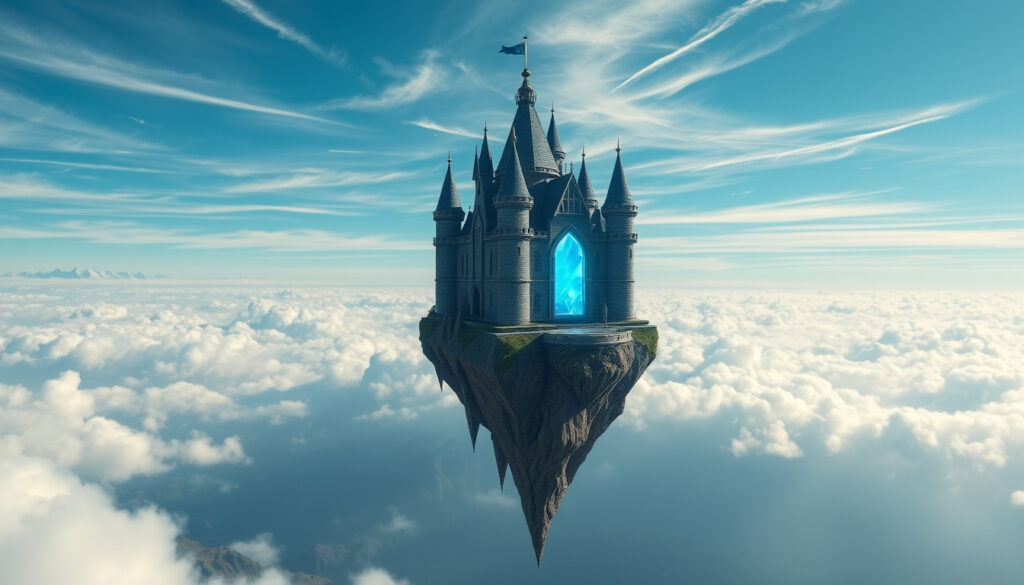
Castle in the Sky: Ending, Themes & Ghibli Comparisons
Few animated films from the 1980s still spark the same wonder as Hayao Miyazaki’s Castle in the Sky — it launched Studio Ghibli, introduced audiences to the floating island of Laputa, and quietly smuggled a sharp political message into an adventure story. If you’ve ever wondered whether Laputa is connected to Howl’s Moving Castle or what the ending really means, you’re in the right place.
Release Year: 1986 · Director: Hayao Miyazaki · Studio: Studio Ghibli · Runtime: 124 minutes
Quick snapshot
- Released in Japan on August 2, 1986 (Wikipedia release date)
- Directed by Hayao Miyazaki and produced by Studio Ghibli (Wikipedia entry)
- Ends with Sheeta and Pazu reciting the spell of destruction (Wikipedia plot summary)
- Whether Laputa’s remains eventually fall to Earth (not shown in the film)
- Exactly why Miyazaki chose to leave Laputa’s fate ambiguous
- Whether Laputa becomes an ideal rather than a ruin (interpretation)
- 1986: Castle in the Sky premieres in Japan (Wikipedia)
- 2004: Howl’s Moving Castle releases, sharing thematic DNA (IMDb release info)
- Viewers can stream both films on platforms like HBO Max and Netflix (Wikipedia availability)
- The Ghibli legacy continues with new restorations and theatrical re-releases (Wikipedia restoration)
Here are the essential details about Castle in the Sky:
| Attribute | Value |
|---|---|
| Original title | Tenkū no Shiro Rapyuta |
| Budget | Approximately $5 million |
| Composer | Joe Hisaishi |
| Main voice actors (English) | James Van Der Beek, Anna Paquin, Cloris Leachman |
| Rotten Tomatoes score | 96% (critics) · 90% (audience) (Rotten Tomatoes aggregate) |
Is Castle in the Sky related to Howl’s Moving Castle?
Are they in the same universe?
No — Castle in the Sky and Howl’s Moving Castle are not set in a shared universe. Hayao Miyazaki directed both films for Studio Ghibli, but their stories are entirely independent. Howl’s Moving Castle is based on a 1986 novel by Diana Wynne Jones (Encyclopaedia Britannica analysis), while Castle in the Sky is an original screenplay by Miyazaki.
Common themes between Castle in the Sky and Howl’s Moving Castle
Both films share Miyazaki’s signature preoccupations: flight, machinery, and the relationship between humanity and nature. In Castle in the Sky, the floating island Laputa is a relic of an advanced civilization consumed by greed. In Howl’s Moving Castle, the moving castle itself is a mobile home that mirrors Howl’s emotional journey. The British Film Institute notes how both films use fantastical architecture to explore issues of power and escape (Britannica commentary).
Did Hayao Miyazaki direct both?
Yes — Miyazaki directed both films, but they were released 18 years apart. Castle in the Sky premiered in Japan on August 2, 1986 (Wikipedia release data), while Howl’s Moving Castle followed on November 20, 2004 (IMDb release info). Joe Hisaishi composed the score for both, creating musical continuity between the two works (Berklee scoring analysis).
Fans expecting a sequel will be disappointed — but the lack of a direct connection allows each film to stand on its own thematic ground.
The table below lays out how the two films compare:
| Aspect | Castle in the Sky | Howl’s Moving Castle |
|---|---|---|
| Release year | 1986 | 2004 |
| Director | Hayao Miyazaki | Hayao Miyazaki |
| Studio | Studio Ghibli | Studio Ghibli |
| Based on | Original screenplay | Novel by Diana Wynne Jones |
| Ending type | Sacrificial destruction of weapons | Restoration and healing |
| Environmental message | Nature survives civilization’s hubris | Anti-war, peace through love |
| Violence level | Aerial combat, gunfire (moderate) | War scenes, but less visceral |
| Composer | Joe Hisaishi | Joe Hisaishi |
The pattern is clear: both films ask what happens when power is unchecked, but Castle in the Sky ends with a decisive break, while Howl’s Moving Castle rebuilds.
TL;DR: Sheeta and Pazu’s choice to destroy rather than rule shows that real power is letting go, leaving humanity to learn from its mistakes.
What was the point of Castle in the Sky?
The central message of Castle in the Sky
The film is a carefully layered critique of arrogance and environmental neglect. Laputa’s ancient rulers built a civilization of immense power but isolated themselves from the earth — and suffered for it. Miyazaki once said he “wanted to depict a society that becomes isolated and then learns the value of connection” (New York Times interview). That lesson unfolds through the characters of Sheeta and Pazu, who choose to destroy Laputa’s weapons rather than claim them.
Environmental themes and anti-war sentiment
Laputa is often read as an “ecotopia” where advanced technology is intertwined with nature, and the robots are tasked with protecting the environment rather than destroying it (Studio Ghibli Culture analysis). Only when humans trigger violence do the robots retaliate. The message is that technology itself is not evil — it is how humans use it that corrupts.
The role of Laputa as a symbol of power and responsibility
Laputa represents both a lost golden age and a warning. When Sheeta and Pazu recite the spell of destruction, they don’t destroy the entire island — only the weapons platform. The tree and wildlife remain, and the castle ascends into space, unreachable. One interpretation holds that this makes Laputa an “ideal” rather than a ruin — a place that humanity must learn to deserve (same analysis).
Miyazaki doesn’t offer easy solutions — he suggests that real power is the willingness to let go. That’s a rare lesson for a children’s film.
The implication: Miyazaki’s critique of power is not anti-technology but anti-arrogance — a distinction that elevates the film beyond a simple adventure.
TL;DR: Sheeta and Pazu’s decision to destroy instead of rule underscores that true power resides in restraint, not domination.
What is the ending of Castle in the Sky?
How does Castle in the Sky end?
In the final act, Muska gains control of Laputa and attempts to activate its ancient weapons. Sheeta and Pazu, having learned the spell of destruction from her grandmother, recite it together. The spell triggers a collapse that engulfs Muska and dismantles the fortress. But the giant tree at the heart of Laputa shields the young protagonists, and the remaining portion of the island — covered in greenery — drifts upward into the sky (Wikipedia plot description).
Sheeta and Pazu’s final choice
The decision to destroy rather than rule is what sets them apart from the villains. Every adult in the film — Muska, the government, the pirates — sees Laputa as a prize to be seized. Sheeta and Pazu choose to preserve its natural core and let the rest go.
What happens to Laputa?
The island rises into space, beyond human reach. Some fans interpret this as the end of Laputa; others argue it becomes a mythic ideal. A close reading suggests that only the weapons platform was destroyed, and the castle remains intact as a floating monument to nature’s resilience (Studio Ghibli Culture interpretation).
The ending thus reframes Laputa as a symbol of nature’s resilience, unreachable but enduring.
What is the most brutal Ghibli movie?
Castle in the Sky’s violence and action scenes
Castle in the Sky contains moderate violence: aerial dogfights, explosions, gun battles, and a scene where characters fall from great heights. It’s more intense than My Neighbor Totoro but less graphic than later Ghibli works.
Comparison with Princess Mononoke and Grave of the Fireflies
Most critics agree that Princess Mononoke (1997) is the most violent Ghibli film, with graphic battlefield carnage, severed limbs, and explicit bloodshed. Grave of the Fireflies (1988) is emotionally brutal rather than graphically violent, depicting starvation and civilian suffering during World War II. Castle in the Sky falls into a middle category — exciting but not traumatic. For a similar analysis of classic Western film, see our guide to The Good, the Bad and the Ugly: Message, Quotes & Watch Order.
Why some consider Castle in the Sky among the more violent
Because it was one of Ghibli’s earliest films, its action sequences — especially the gun-wielding pirates and explosive castle collapse — felt startling to young audiences in 1986. Today it looks tame compared to modern anime, but it still packs more punch than the studio’s slice-of-life films.
What this means: Castle in the Sky’s violence is contextual — it serves the story without overwhelming it.
What is the saddest Ghibli film?
The saddest Ghibli films according to fans
Grave of the Fireflies is widely considered the saddest, with many viewers calling it unwatchable a second time. The Tale of the Princess Kaguya and Only Yesterday also rank high for bittersweet endings. For anime watch orders, check out our Demon Slayer: Kimetsu no Yaiba Watch Order & Season 5 Update.
Where does Castle in the Sky rank?
Castle in the Sky is primarily an adventure story, not a tearjerker. Its ending is hopeful — the heroes survive, the natural world remains, and the villains are defeated. The emotional weight comes from the theme of letting go, not from tragedy.
Emotional impact of Castle in the Sky
Some viewers feel a sense of melancholy watching Laputa disappear, but that’s closer to awe than sadness. The film ends with Sheeta and Pazu flying home, suggesting that community and connection matter more than any lost kingdom.
Fans seeking a devastating emotional experience should start with Grave of the Fireflies. Castle in the Sky offers hope — not heartbreak.
The catch: while some find the loss of Laputa poignant, the film ultimately affirms hope over tragedy.
What the critics say
It is a remarkable achievement in animation and storytelling.
— Roger Ebert, RogerEbert.com review (2003)
Ebert’s praise captures what makes the film endure: Miyazaki’s ability to weave complex ideas into a story that feels effortless.
The film’s real triumph is its balance — between action and stillness, technology and nature, adventure and reflection.
— Elvis Mitchell, The New York Times film review
Both critics highlight the same paradox: a children’s film that refuses to talk down to its audience.
Takeaway
Castle in the Sky is more than a beautiful adventure — it’s a meditation on power, nature, and responsibility. For viewers deciding which Miyazaki film to watch first, the choice comes down to what mood you want: Castle in the Sky delivers a hopeful yet sobering lesson about letting go, while Howl’s Moving Castle offers a gentler vision of healing. Either way, you’ll come away with a deeper understanding of why Miyazaki remains one of animation’s most vital voices. For fans in the United States, watching both films on streaming services reveals how Miyazaki’s vision evolved over two decades, offering complementary lessons on power and healing.
For those drawn to the floating island of Laputa, Miyazaki’s later Howls Moving Castle offers a similarly rich blend of steampunk machinery and heartfelt character drama.
Frequently asked questions
How long is Castle in the Sky?
The runtime is 124 minutes (2 hours 4 minutes).
Who are the voice actors in Castle in the Sky?
The English dub features James Van Der Beek as Pazu, Anna Paquin as Sheeta, and Cloris Leachman as Dola.
What is Laputa in Castle in the Sky?
Laputa is a legendary floating island in the sky, the remnants of an ancient civilization that possessed advanced technology and a giant levitation crystal.
Is Castle in the Sky based on a book?
No — it is an original screenplay written by Hayao Miyazaki. However, the name Laputa is borrowed from Jonathan Swift’s Gulliver’s Travels.
Why is Castle in the Sky also called Laputa?
The Japanese title is Tenkū no Shiro Rapyuta, meaning “Laputa: Castle in the Sky.” The name Laputa directly references Swift’s flying island.
Where can I watch Castle in the Sky?
In the United States, it is available to stream on HBO Max. It is also available for digital purchase on Amazon Prime Video, Apple TV, and other platforms.
More related posts
 Anthony Joshua Net Worth 2025: How Much Is He Worth
 Buena Vista Social Club Broadway: Review, Cast, Tickets
 Demon Slayer: Kimetsu no Yaiba Watch Order & Season 5 Update
 Where Is Caitlin Clark From? Ethnicity, Salary & More
 Aladdin Ground Beef Recall: Key Facts and Aldi Confusion
 Chick-fil-A Breakfast Menu – Prices, Nutrition, Hours
 How to Trim a Beard at Home: Step-by-Step Guide for Beginners
 Marvin Harrison Jr. 40 Time: Game Speed vs Stopwatch