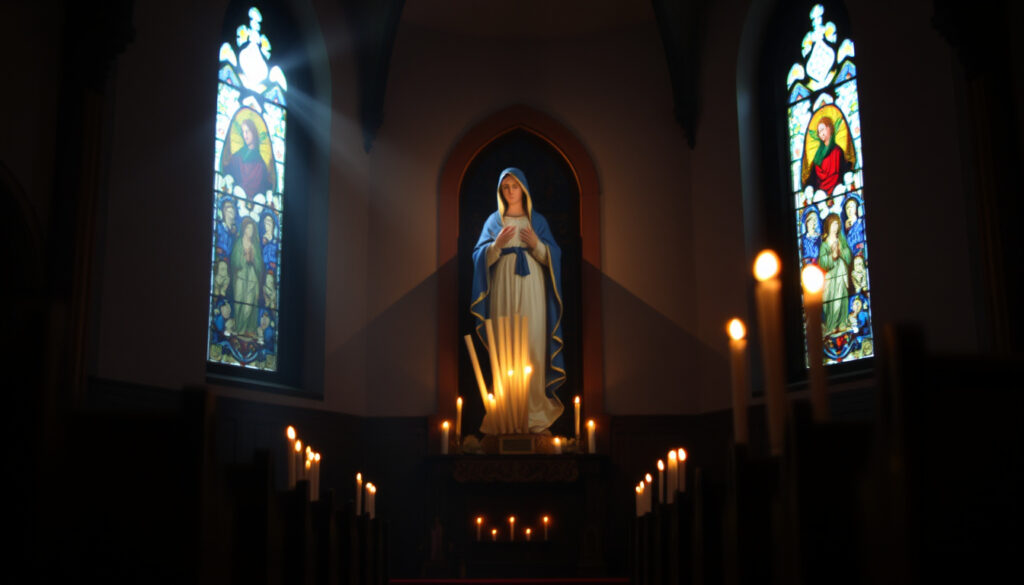
Hail Holy Queen Prayer: Full Text, Meaning, and How to Pray It
There’s something quietly powerful about a prayer that has been whispered by millions of people across a thousand years, often in the same words. The Hail Holy Queen, or Salve Regina, is one of those rare devotions that began in a medieval monastery and now finds its way into the hands of lay Catholics before bed, after the Rosary, and during quiet moments of reflection.
Full prayer length (English): 68 words ·
Year of composition: 11th century (attributed to Hermann of Reichenau) ·
Position in daily Rosary: Final prayer after the 5 decades ·
Number of language variants known: At least 20 languages including Latin, Spanish, Malayalam ·
Common recitation context: End of Rosary, night prayers, Eucharistic adoration
Quick snapshot
- Composed in the 11th century (Vatican News)
- Attributed to Hermann of Reichenau (Vatican News)
- Used as a hymn in monastic night prayer (Vatican News)
- English version (68 words) (Vatican News)
- Latin original (Salve Regina) (Vatican News)
- Common Spanish translation (Vatican News)
- Available in Latin, English, Spanish, Malayalam, etc. (Vatican News)
- Different traditions have slight variations (Vatican News)
- Widely used in global Catholic communities (Vatican News)
Six key facts about the Hail Holy Queen prayer, from its origin to its daily use.
| Label | Value |
|---|---|
| Prayer Name | Hail Holy Queen (Salve Regina) |
| Language of Origin | Latin |
| Composer | Hermann of Reichenau (attributed) |
| Century | 11th century |
| Word Count (English) | 68 |
| Primary Usage | Concluding prayer of the Rosary; night prayer |
What is the full Hail Holy Queen prayer?
English version
The standard English text, as presented by Vatican News (the Holy See’s official news outlet), runs 68 words and opens with a direct address to Mary:
Hail, holy Queen, Mother of mercy, our life, our sweetness, and our hope. To thee do we cry, poor banished children of Eve; to thee do we send up our sighs, mourning and weeping in this valley of tears. Turn then, most gracious advocate, thine eyes of mercy toward us; and after this our exile, show unto us the blessed fruit of thy womb, Jesus. O clement, O loving, O sweet Virgin Mary.
The prayer uses the traditional “thee” and “thine” forms, which Catholic Answers (a lay apostolate of Catholic apologetics) notes is the standard English rendering. The phrase “valley of tears” is one of its most recognizable images.
Latin version (Salve Regina)
The original Latin incipit, preserved in monastic chant for nearly a millennium, begins:
Salve, Regina, Mater misericordiæ, vita, dulcedo, et spes nostra, salve. Ad te clamamus, exsules filii Hevæ. Ad te suspiramus, gementes et flentes in hac lacrimarum valle. Eia ergo, advocata nostra, illos tuos misericordes oculos ad nos converte. Et Jesum, benedictum fructum ventris tui, nobis post hoc exsilium ostende. O clemens, O pia, O dulcis Virgo Maria.
Why do Catholics say the Hail Holy Queen prayer?
Purpose as a concluding prayer
Catholics recite the Hail Holy Queen at the end of the Rosary as a final act of Marian devotion. The USCCB instructs that after the five decades, the Rosary concludes with this prayer, followed by a versicle and response: “Pray for us, O holy Mother of God” / “That we may be made worthy of the promises of Christ.” The prayer expresses confidence in Mary’s role as advocate and intercessor.
Theological meaning of mercy and hope
The prayer’s imagery—”our life, our sweetness, and our hope” and “in this valley of tears”—reflects a theology of trust in Mary’s maternal care. It is a plea for mercy and a request for her intercession to lead believers to Jesus. This aligns with the Catholic Answers explanation that the Hail Holy Queen is a petition for Mary’s help in the journey of faith.
What prayer do you say after Hail Holy Queen?
The final prayers of the Rosary
After the Hail Holy Queen, the Rosary continues with a versicle and response: “Pray for us, O holy Mother of God” / “That we may be made worthy of the promises of Christ.” Then the concluding collect is recited: “O God, whose Only Begotten Son, by His life, death, and resurrection, has purchased for us the rewards of eternal life, grant, we beseech Thee, that meditating on these mysteries of the Most Holy Rosary of the Blessed Virgin Mary, we may imitate what they contain and obtain what they promise. Through Christ our Lord. Amen.” This is followed by the Sign of the Cross.
Common variations
In some traditions, the Rosary may include additional prayers such as the Memorare or the St. Michael the Archangel prayer after the collect. The EWTN notes that the Hail Holy Queen may also be sung as the Salve Regina hymn.
How do you end the rosary?
Step-by-step conclusion
- After completing the five decades, recite the Hail Holy Queen (Salve Regina).
- Say the versicle: “Pray for us, O holy Mother of God” and the response: “That we may be made worthy of the promises of Christ.”
- Recite the concluding collect (O God, whose Only Begotten Son…).
- Make the Sign of the Cross.
This sequence is standard across USCCB and EWTN guides. Some traditions add the Litany of Loreto or Sub tuum praesidium, but the core steps remain the same.
What should Catholics do before bed?
Night prayers including the Hail Holy Queen
The Hail Holy Queen is a traditional bedtime prayer for many Catholics. It is often recited as part of Compline (night prayer) in monastic communities, and lay Catholics frequently include it in their evening devotions. The prayer’s phrase “in this valley of tears” reflects the evening theme of trust in Mary’s protection through the night.
Examination of conscience
Before bed, many Catholics also perform an examination of conscience, reviewing their day and seeking forgiveness. The Hail Holy Queen can be paired with this practice as a closing prayer. The Catholic Answers guide recommends including the Hail Holy Queen in nightly Rosary recitation, often after the final decade.
Related reading: How to Lower Blood Pressure Fast: Proven Tips and Emergency Guide · Kidney Stones in the Toilet: What They Look Like & Next Steps
prayers4reparation.wordpress.com, stmary-ell.solutiosoftware.com, reddit.com, youtube.com, youtube.com, catholiccompany.com, facebook.com
For those interested in a deeper dive, the full text and history of the Hail Holy Queen provides additional context on this beloved Marian prayer.
Frequently asked questions
What is the Hail Holy Queen prayer in Latin?
The Latin version is the Salve Regina, beginning: “Salve, Regina, Mater misericordiæ, vita, dulcedo, et spes nostra, salve.” For the full text, see the Latin version above.
Can I pray the Hail Holy Queen in Spanish?
Yes, the prayer is available in Spanish as “Dios te salve, Reina y Madre.” The Vatican News includes a common Spanish translation.
Is the Hail Holy Queen the same as the Salve Regina?
Yes, the Hail Holy Queen is the English translation of the Latin Salve Regina. The prayer is identical in meaning, but the English version uses traditional language.
What are the words to the Hail Holy Queen prayer?
The full English text is: “Hail, holy Queen, Mother of mercy, our life, our sweetness, and our hope. To thee do we cry, poor banished children of Eve; to thee do we send up our sighs, mourning and weeping in this valley of tears. Turn then, most gracious advocate, thine eyes of mercy toward us; and after this our exile, show unto us the blessed fruit of thy womb, Jesus. O clement, O loving, O sweet Virgin Mary.”
How do I pray the Hail Holy Queen with the Rosary?
After finishing the five decades of the Rosary, recite the Hail Holy Queen, followed by the versicle “Pray for us, O holy Mother of God” and the response, then the concluding collect and the Sign of the Cross.
When was the Hail Holy Queen prayer written?
The prayer was composed in the 11th century, attributed to Hermann of Reichenau. It was originally used as a hymn in monastic night prayer.
Do Catholics say the Hail Holy Queen every day?
Many Catholics say the Hail Holy Queen daily as part of the Rosary or as a bedtime prayer. While not required, it is a common devotional practice recommended by the Church.
The Hail Holy Queen prayer bridges centuries and cultures, from a medieval monastery to the daily lives of lay Catholics. Its simple plea for mercy and hope continues to resonate worldwide.
More related posts
 Conmebol World Cup Qualifiers – 2026 Final Standings
 Mood Ring Color Meanings: Complete Guide to Colors and Emotions
 Civil War (2024) Film: Controversy, Box Office, and Review
 What Is Modal Fabric? Pros, Cons & Comparisons to Cotton
 Check Your Dairy Queen Gift Card Balance
 Epcot Food and Wine Festival 2025 – Dates Tickets Booths Concerts
 Marine Veteran Wife Detained While Breastfeeding: What Happened?
 Side Effects of Semaglutide – What You Need to Know